


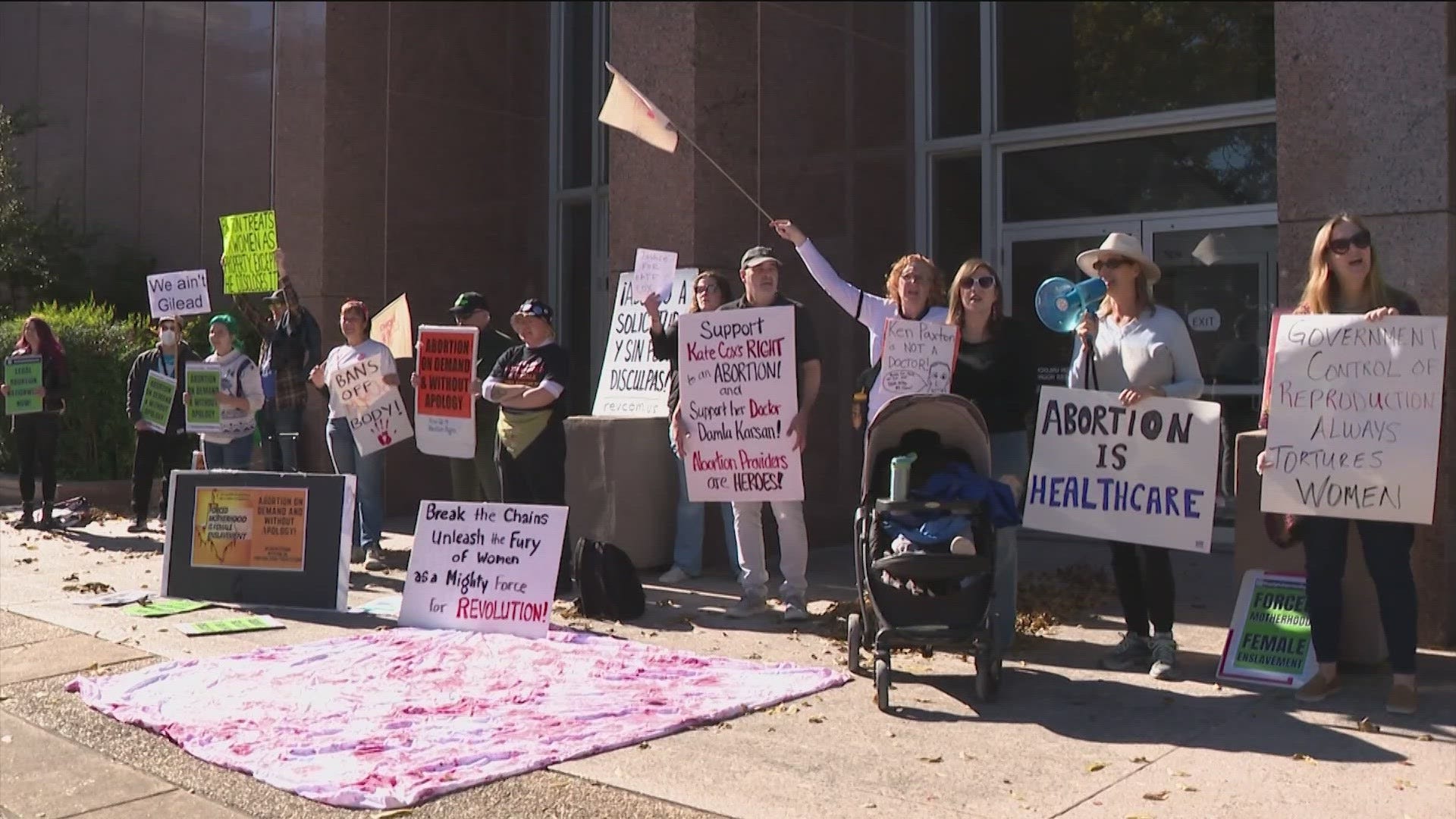
This edition of Death and Texas talks a lot about abortion, pregnancy loss and stillbirth. If that’s not your jam, feel free to skip this one.
Recently there has been a story in the news about a woman in Texas named Kate Cox. Kate sought to terminate her pregnancy in Texas after learning that her child was diagnosed with Trisomy 18, a chromosomal disorder that causes a lot of serious heart, lung, gastrointestinal and brain issues and usually leads to stillbirth or death within the first few days or weeks of life. Kate also experienced health complications with this pregnancy that led to her being hospitalized several times in the 20-ish weeks she was pregnant.
Every time I read articles about the effects of Texas abortion bans from news sources like NPR, CNN or more progressive news sites, I notice the word choices. “Fetus,” “pregnancy,” a noticeable lack of “baby” or “child.” It’s the result of careful organization efforts to try to protect abortion access in deeply red states: in the land of conservatives trying to shield innocent children from the murderous tendencies of baby-killers, pro-abortion organizers tend to use more clinical, scientific language in order to keep people focused on the humanity of the people seeking an abortion. Pro-abortion rhetoric is full of arguments that a fetus is not a baby, and that fetuses can hardly be considered human before the mythical age of viability. While I understand the conditions that brought about this trend and I understand its utility in protecting abortion access, I desperately wish it could be different because I’ve seen the detrimental effects this rhetoric has on bereavement for people who experience miscarriage and stillbirth earlier in their pregnancies.
Many of the women and couples I have worked with share stories of being told multiple times they should terminate their pregnancy, or at least heavily consider it. For some people, being directed to terminate multiple times may not have felt like a big deal, or may have helped validate their decision to terminate. For many of the people I have worked with, however, being told over and over again that termination was their best course of action was infuriating. For these people, their pregnancy was sacred time and they did not want it to end at their own hand. It may be the only time they have with their child, after all.
I believe we are at a crossroads of how we advocate for abortion access. Premature babies now survive at earlier and earlier gestational ages—NICUs across the country are filled with 27, 26 and 25 weekers who are expected to survive with manageable complications. One of the children in my life who is most dear to me was born prematurely at 23 weeks. I am a social worker who believes both in unrestricted abortion access and in unconditional care for families who choose to carry their children with terminal diagnoses to term. I do not believe that we have to undermine the value of people’s children in order to also demand that abortion be easy to access and safe.
When I read these articles and listen to this coverage, I find myself wondering about Kate Cox. I wonder how she thinks about her pregnancy. I wonder how she thinks about the fetus who had the misfortunate to draw three chromosomes instead of two. I wonder if she picked out names. I wonder if she bought the outfit she thought she would bring her child home in, like so many of the parents I support have done. I hope the people closest to her are listening to her and supporting her in her grief and pain, however it is manifesting. I wonder about the other families I know whose children have Trisomy 18, including the beautiful little T18 girl I know who is about to have her first birthday. How do these articles affect them? How does hearing “incompatible with life” over and over feel when they are looking at their baby, still alive, or looking at photos of their child taken during however many days, weeks, months or years of life they had? How do the parents who decided that termination for medical reasons (TMFR) was the right decision for them feel when seeing their intimate, personal decision being sent to trial over and over in the media? How many people have numbed the complicated grief of terminating a pregnancy for any reason out of fear that experiencing grief means they made the wrong choice? How disappointing that we live in a culture that cannot simply listen to people—if you listen, people will tell you exactly what they need. There is no need to legislate, restrict, define or debate the conditions in which people should have access to abortions.
Palestinian families have been stripped of their ability to make choices about their children’s safety, and people are still being murdered every day. Please continue to reach out to your representatives and stay tuned in to local efforts to demand a ceasefire and divestment from machines of war.
How Far the Light Reaches, part memoir and part Nat Geo-esque musings on weirdo little sea creatures, was one of my favorite reads last December, and Maddy Court recently chatted with author Sabrina Imbler on the T.V. Dinner newsletter.
Speaking of newsletters, Austin’s favorite guitar-pickin’, Mary Gauthier-cover-slingin’, rootinest tootinest folk singer Creekbed Carter Hogan just launched a newsletter! I have three free one-month trials to their paid newsletter to give out, let me know if you’d like the chance to trial a paid subscription (trust me, it’s worth it).
I’ve been part of a queer book club for six months now and it’s been such a joy to meet up regularly with other queer people and talk about weird gay-ass books. Next time, we are reading Blackouts by Justin Torres.
Since I now send a few people snail mail regularly, I am treating myself to some fun new stationery as a birthday gift. Any recommendations on stationery you love?
<3 <3 <3 !!!